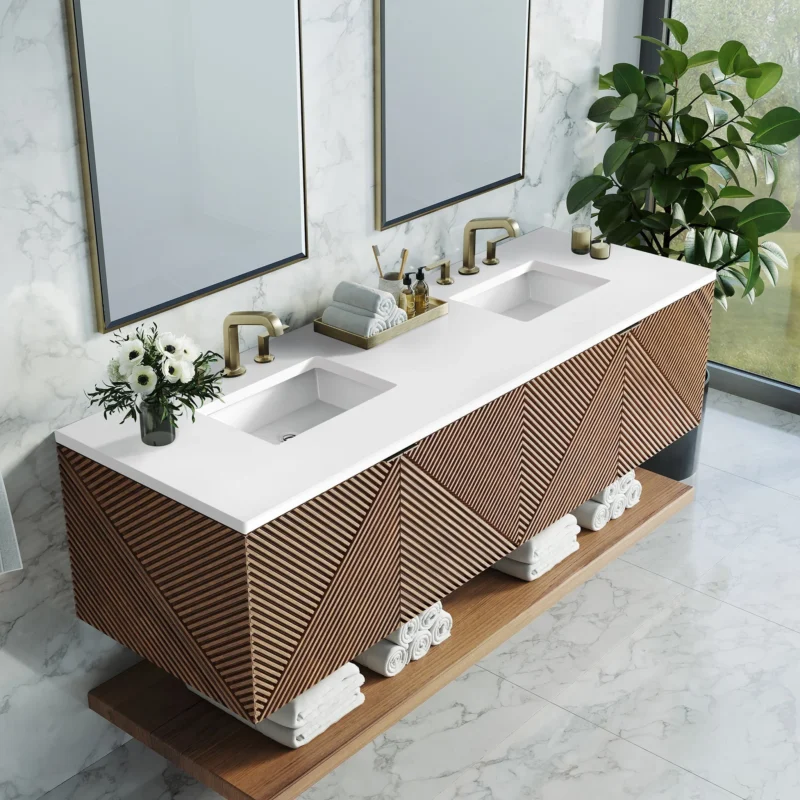


Japandi Bathroom Vanity: Warm Minimalism That Feels Calm Every Day
A Japandi bathroom vanity combines two qualities homeowners increasingly want in the bathroom: simplicity and warmth. The Japandi style blends Japanese-inspired restraint with Scandinavian comfort, creating spaces that feel clean, quiet, and highly livable. In a bathroom, that combination is especially effective because the room benefits so much from order, softness, and natural material.
The appeal of a Japandi bathroom vanity is that it does not rely on flashy details or trend-heavy decoration. Instead, it uses proportion, texture, and thoughtful design to create calm. The result is a bathroom that feels more intentional and less noisy, which is exactly why this style has gained such a strong following.

What Makes a Japandi Bathroom Vanity Different?
A Japandi bathroom vanity usually combines minimalist lines with warm, natural finishes. Unlike very stark modern designs, Japandi avoids feeling cold. Unlike rustic styles, it avoids visual heaviness. The cabinet is typically simple, but the material palette adds softness. That may mean light oak, warm walnut-inspired tones, matte finishes, or subtle integrated hardware.
The beauty of this style lies in what it leaves out. A Japandi bathroom vanity does not need ornate detailing or aggressive contrast. It works because every element feels intentional and quiet.
Why This Style Works So Well in Bathrooms
Bathrooms are often filled with hard surfaces, bright lighting, and daily-use items that can quickly create clutter. Japandi design responds to that by encouraging restraint. A Japandi bathroom vanity helps the room feel more grounded and more serene, even when the layout itself is not especially large.
It also suits the way many homeowners actually want to feel in their bathroom. They want the room to function well, but they also want it to feel like a break from the rest of the day. Japandi supports exactly that mood.
Best Sink Layouts for a Japandi Bathroom Vanity
Single Sink Setups
A single-sink Japandi bathroom vanity often feels the most natural because it preserves generous countertop space and keeps the composition calm. For one-user bathrooms or smaller spaces, this is often the most elegant route. To compare layouts, browse single sink vanities.
Double Sink Setups
Japandi can also work beautifully in shared bathrooms. A double-sink Japandi bathroom vanity should still maintain wide spacing, clean symmetry, and disciplined storage. If two users need dedicated space, explore double sink vanities.
Freestanding vs. Floating Japandi Design
Both forms can work, but floating vanities are often especially effective in Japandi interiors because they reinforce openness and clean lines. A wall-mounted vanity keeps the room feeling light while allowing the wood finish to remain the main source of warmth. For this direction, browse wall-mounted vanities.
Freestanding options also have a place, especially in transitional Japandi spaces that want a slightly more grounded feel. If you prefer a furniture-like presence, compare freestanding vanities.
Best Finishes for a Japandi Bathroom Vanity
Light oak, white oak, and soft natural wood tones are among the strongest choices for a Japandi bathroom vanity. Muted greige and warm white can also work, especially if the room already has plenty of wood elsewhere. The main priority is avoiding finishes that are too glossy, too cold, or too loud.
A Japandi bathroom vanity should feel natural and quiet. Even darker woods can work if the rest of the room remains soft and balanced.
Countertops and Hardware
Countertops in Japandi bathrooms work best when they are clean and restrained. White quartz, light stone-look surfaces, or very subtle veining are all strong directions. Hardware should feel minimal as well. Thin pulls, integrated handles, or very simple knobs in matte black, brushed nickel, or muted brass usually work well.
The vanity should not compete with too many decorative details. The goal is a room that feels composed and effortless.
Storage and Daily Function
A beautiful Japandi bathroom vanity only succeeds if it supports a calm routine. That means strong storage matters just as much as appearance. Drawers that keep daily essentials hidden, compartments that divide personal items, and enough counter space to avoid clutter all help preserve the look over time.
Many bathrooms featured on Houzz show how powerful this combination can be: simple wood vanity, quiet stone top, and almost no visual clutter.
Common Mistakes to Avoid
One mistake is confusing Japandi with emptiness. The style should feel calm, not unfinished. Another mistake is introducing too many competing materials, such as busy tile patterns, strong wall colors, and heavily figured wood all at once. A Japandi bathroom vanity works best when the rest of the room supports the same quiet discipline.
For more examples of how warm minimalism is used in high-end interiors, editorial home features on Architectural Digest are excellent references.
How to Shop for the Right One
Start with function first. Decide whether the bathroom needs one or two sinks, then choose whether a floating or freestanding profile better suits the space. From there, compare wood tones and countertop finishes based on the room’s lighting and wall materials. A Japandi bathroom vanity should feel calm, useful, and quietly beautiful.
To compare styles, sizes, and categories more broadly, visit the main Shop page. And if price matters in the decision, BathUSA’s Price Beat Guarantee is a helpful tool while choosing the right Japandi bathroom vanity.