
Transitional White Bathroom Vanity: The Safe Choice That Still Feels Beautiful
A transitional white bathroom vanity remains one of the most dependable choices in bathroom design because it solves several common homeowner concerns all at once. It feels bright, clean, and timeless. It works with many different flooring, wall, and countertop materials. And it avoids the extremes that often make bathrooms feel too trendy or too formal. In other words, it gives you long-term flexibility without sacrificing style.
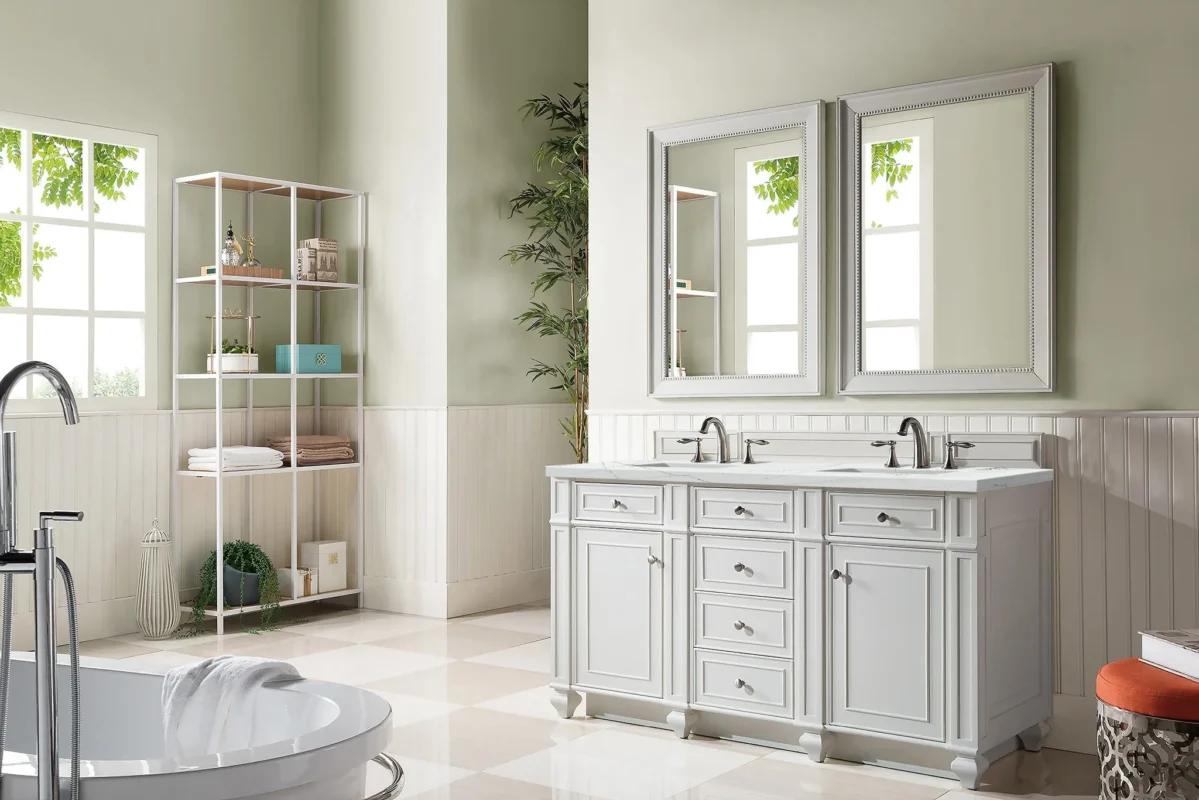
The transitional part matters just as much as the white finish. A purely modern white vanity can sometimes feel stark, while a traditional one can feel too ornate. A transitional white bathroom vanity sits in the middle. It uses classic elements such as simple framed doors or subtle detailing, but keeps the overall look restrained and current. That balance is why it continues to appeal in both remodels and new builds.

Why Transitional Style Has Such Staying Power
A transitional white bathroom vanity works because it does not swing too far in either direction. It is more detailed than very minimal modern cabinetry, but cleaner than formal traditional furniture-style vanities. That makes it highly adaptable. If your home has mixed influences, or if you want the bathroom to feel updated without looking overly trendy, transitional design is often the safest path.
White adds another layer of flexibility. It reflects light well, keeps the room feeling open, and works with almost every major bathroom material.
What Makes a White Vanity Feel Transitional?
The details are what define the style. A transitional white bathroom vanity often includes:
Subtle shaker or framed door styles
Simple but not ultra-minimal hardware
Balanced proportions that feel classic without looking old-fashioned
A finish palette that stays clean and neutral
The goal is not to look historic or futuristic. It is to feel polished, familiar, and fresh.
Single Sink and Double Sink Options
Single Sink Layouts
A single-sink transitional white bathroom vanity is ideal for smaller bathrooms, guest bathrooms, and homeowners who want a wider uninterrupted counter. It also emphasizes the brightness of the white finish and makes the cabinet feel clean and simple. To compare layouts, browse single sink vanities.
Double Sink Layouts
In larger bathrooms, a transitional white bathroom vanity can look especially strong in a double-sink configuration because white keeps the broader cabinet from feeling heavy. For shared-use layouts, explore double sink vanities.
Freestanding vs. Floating
A freestanding transitional white bathroom vanity is the more classic choice. It reinforces the cabinet’s furniture-like character and often works especially well in homes with slightly more traditional architecture. For this direction, browse freestanding vanities.
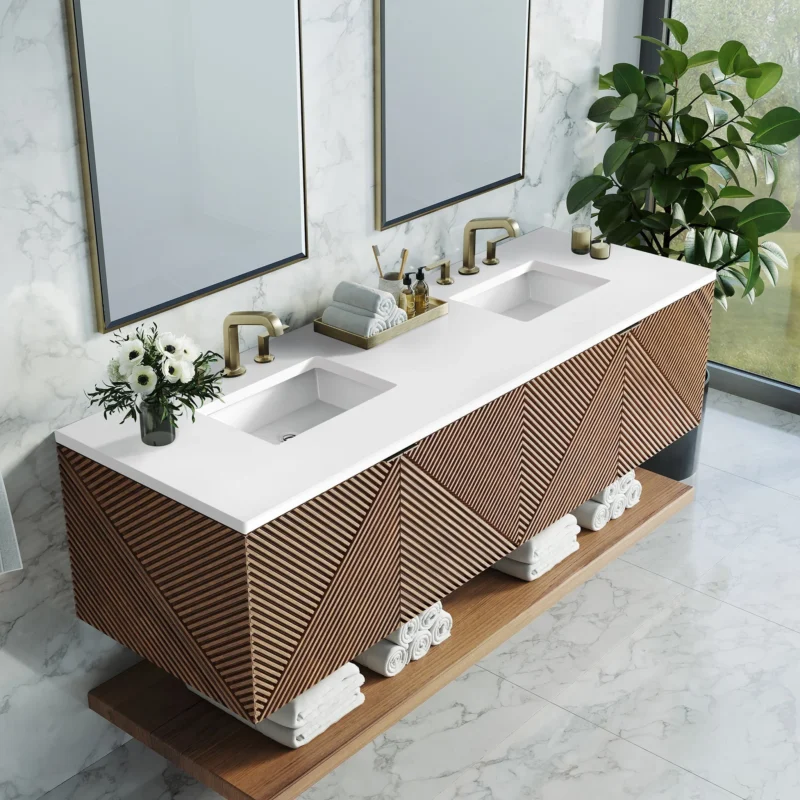
A floating transitional white bathroom vanity is less common, but it can work beautifully when you want a brighter cabinet with a more modern silhouette. If you want that lighter effect, compare wall-mounted vanities.
Best Countertops and Hardware
White cabinetry gives you a lot of freedom, but not every pairing is equally strong. Quartz remains one of the best countertop options because it is durable and visually clean. Light marble-look quartz adds refinement while keeping the bathroom bright. For hardware, brushed nickel is a classic pairing, matte black gives the vanity a sharper edge, and brushed brass can add warmth if the room needs it.
The best transitional white bathroom vanity setups keep the supporting materials simple and coordinated. That is what allows the cabinet to feel timeless instead of generic.
Why White Still Works So Well
Some homeowners worry that white is too safe. In practice, that is usually a strength, not a weakness. A transitional white bathroom vanity lets you update mirrors, paint, lighting, and accessories over time without forcing you into one fixed design identity. It is especially helpful in bathrooms where resale value, flexibility, and long-term satisfaction matter.
Projects shown on Houzz often highlight white transitional vanities because they work across so many different renovation goals and room sizes.
Common Mistakes to Avoid
One mistake is choosing a white that clashes with other whites in the room. Bright white, warm white, and soft white all behave differently. Another is pairing a transitional vanity with overly modern or overly ornate fixtures that confuse the style. A third is assuming all white vanities look the same. Door style, hardware, and countertop all make a major difference.
For more high-end examples of how white vanities are made to feel layered and sophisticated, editorial home features on Architectural Digest are useful references.
How to Shop with Confidence
Start by deciding whether your room benefits more from a single sink or double sink setup. Then compare the white finish carefully against your tile and countertop selections. From there, think about whether the room wants a more grounded freestanding cabinet or a lighter floating form. A transitional white bathroom vanity should feel calm, polished, and easy to live with.
To compare more layouts, sizes, and styles, browse the main Shop page. And if price matters in the final decision, BathUSA’s Price Beat Guarantee is worth reviewing while narrowing down the right transitional white bathroom vanity.