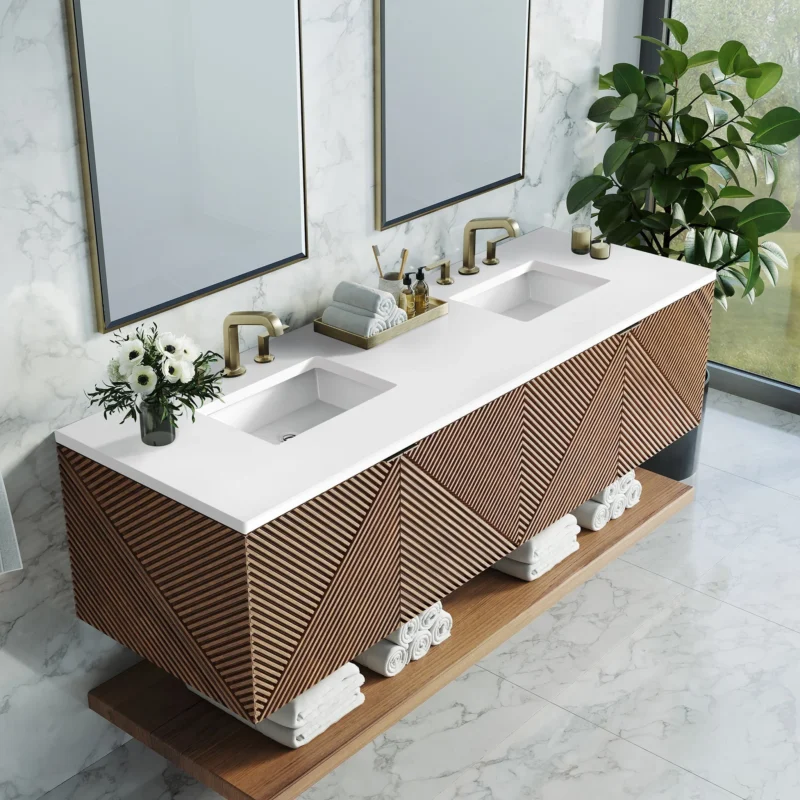


Fluted Bathroom Vanity: A Modern Way to Add Texture Without Adding Clutter
A fluted bathroom vanity has become one of the most distinctive ways to add sophistication to a bathroom without relying on bold color or ornate detail. Fluting introduces vertical texture to the cabinet face, creating visual movement, light play, and a more custom look. It gives the vanity personality, but in a way that can still feel elegant and controlled.
That is what makes this style so appealing. A fluted bathroom vanity offers something different from flat-panel minimalism, but it does not have to overwhelm the room. When paired with the right finish, countertop, and mirror, it can make a bathroom look more design-conscious and elevated while still feeling livable and timeless.

Why Fluting Has Become So Popular
Bathrooms often rely on smooth surfaces: tile, stone, glass, polished metal. A fluted bathroom vanity adds texture in a subtle but effective way. The vertical lines create shadow and rhythm, which gives the cabinet more presence than a plain slab front without needing decorative trim or heavy ornamentation.
This makes fluting especially attractive for modern and transitional bathrooms. It introduces detail, but the detail is still disciplined. That is a major reason the look has become so popular in higher-end residential design.
What Styles Pair Well with a Fluted Bathroom Vanity?
A fluted bathroom vanity works especially well in modern, transitional, and boutique-hotel-inspired bathrooms. In modern settings, it softens clean geometry with a little more visual depth. In transitional spaces, it creates interest while still feeling refined. In spa-like bathrooms, fluting can add warmth and craftsmanship without disrupting the calm feel of the room.
Because the texture already adds interest, the rest of the vanity usually benefits from restraint. Clean countertops, simple mirrors, and disciplined hardware choices help the cabinet stand out in the right way.
Single Sink or Double Sink?
Single Sink Layouts
A single-sink fluted bathroom vanity often allows the texture to read more clearly because the vanity face is less interrupted. This is a strong option for guest bathrooms, powder rooms, and smaller primary bathrooms. To compare layouts, browse single sink vanities.
Double Sink Layouts
In wider bathrooms, a double-sink fluted bathroom vanity can look very luxurious, especially if the fluting is consistent across the full width and the mirrors are well scaled. For shared-use options, explore double sink vanities.
Freestanding or Floating?
A floating fluted bathroom vanity is a particularly strong combination. The wall-mounted form keeps the cabinet feeling light, while the texture adds warmth and depth. If you want that architectural look, browse wall-mounted vanities.
A freestanding fluted bathroom vanity can also work beautifully, especially in bathrooms that want more grounding or furniture-like presence. For those styles, browse freestanding vanities.
Best Finishes for a Fluted Bathroom Vanity
Light wood tones are among the most popular choices because they allow the texture to feel warm and tactile. White and beige can look beautiful when the fluting is subtle and the room is very clean-lined. Darker finishes can be dramatic and luxurious, but they require enough light in the room so the texture does not disappear.
The finish should support the fluting, not hide it. A fluted bathroom vanity is all about shadow, texture, and visual rhythm.
Countertops, Hardware, and Mirrors
Since the cabinet face already carries detail, the countertop usually works best when it remains calm and bright. White quartz and lightly veined stone-look tops are especially strong. Hardware should be simple and not overcomplicate the texture. In some cases, integrated pulls or very restrained knobs are the best solution.
Mirror choice matters too. A fluted bathroom vanity often looks especially good with a simple mirror shape, whether rectangular or softly rounded, because that keeps the visual emphasis where it belongs.
Design galleries on Houzz often show how textured vanities look best when the rest of the bathroom stays composed rather than overly layered.
Common Mistakes to Avoid
One mistake is adding too many other patterned surfaces around the vanity. If the shower tile, floor tile, wallpaper, and vanity all demand attention, the room can feel busy quickly. Another mistake is using lighting that is too flat, since fluting depends on light and shadow to show its depth. A third mistake is choosing hardware that interrupts the texture awkwardly instead of complementing it.
For more examples of how texture is used in refined bathroom interiors, editorial projects from Architectural Digest can be excellent reference points.
How to Shop with Confidence
Start with the overall room style. If the bathroom already has a lot of visual movement, a fluted vanity may need a simpler finish and top. If the room is very clean and minimal, fluting can be exactly the feature that gives it depth. Then decide on sink layout and whether the vanity should feel floating or grounded. A fluted bathroom vanity should look intentional, not decorative for its own sake.
To compare categories and sizes more broadly, browse the main Shop page. If price is part of the process, BathUSA’s Price Beat Guarantee is another useful resource while selecting the right fluted bathroom vanity.